
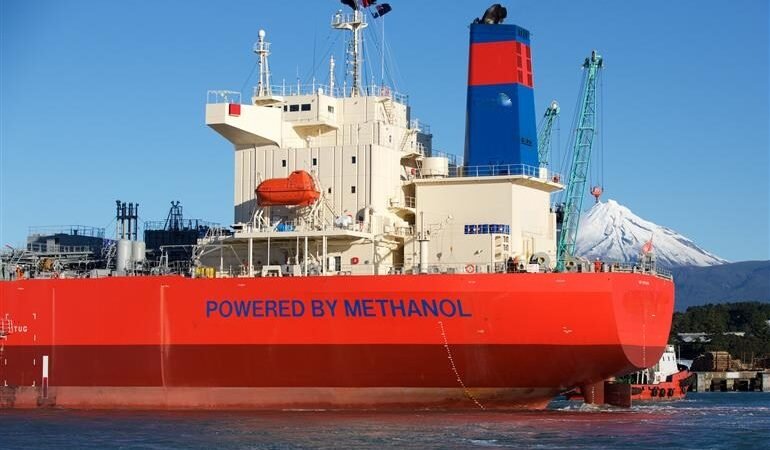
The race to decarbonise the world’s shipping lanes is entering a new, decisive phase. While the journey towards a zero-emission future is long, a clear and practical pathway is being charted. Methanol is gradually emerging as an alternative fuel of choice. The recent completion of a major engine retrofit for a COSCO containership highlights a significant swing in the maritime industry. There is deliberate movement from theoretical discussions to tangible, steel-and-pipe conversions.
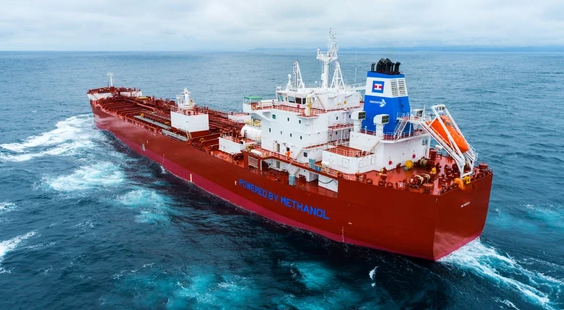
The collaboration between COSCO Shipping Lines, the China Classification Society, and engine maker Everllence to convert the main and auxiliary engines of the COSCO Shipping Libra is a milestone. This project was completed in September 2024 and was the first to convert a large-bore Everllence B&W S90 two-stroke engine to dual-fuel methanol capability. This came after Maersk’s pioneering retrofit of the Maersk Halifax just some months earlier. It is a powerful trend that has affirmed methanol retrofitting as a repeatable, scalable process and not a one-off experiment.
As noted by Everllence, there are over 300 vessels already equipped with the S90 engine class alone, which means the potential pool for similar conversions is substantial. It offers shipowners a viable strategy to extend the life and compliance of existing vessels in the face of tightening global emissions regulations, rather than relying solely on costly newbuilds. DNV’s Alternative Fuels Insights database highlights this momentum, listing 77 vessels already methanol-capable and a staggering 365 more on order for delivery by 2030.
Why Methanol?
There are some advantages unique to methanol. These include:
- Practical Handling — Methanol is a liquid at ambient temperature, making storage and bunkering procedures similar to conventional marine fuels. This significantly lowers the infrastructure barrier compared to gases like LNG or hydrogen, which require complex cryogenic systems or immense pressure tanks.
- Dual-Fuel Flexibility — Dual-fuel engines allow vessels to burn both methanol and traditional fuel oil. This provides critical operational security, ensuring a ship can complete its voyage even if methanol is unavailable at a particular port.
- Decarbonisation Pathway — While green methanol (produced from renewable sources) is the ultimate goal, even conventional methanol can offer modest well-to-wake emissions reductions. More importantly, it creates a clear pathway. As the production of green and blue methanol scales up, the same vessels and infrastructure can immediately leverage these cleaner fuels without further modification.
What Does the Future Hold?
The future painted by these developments is one of rapid transformation. The order book for new methanol-capable vessels is strong, and the successful retrofitting of industry workhorses like the S90 engine opens a parallel track for the existing global fleet. The prospects include:
- An Increase in Retrofit Projects — As engineering solutions are standardised and shipyard capacity grows, engine retrofits will become a more common and cost-effective dry-dock activity.
- Accelerated Bunkering Infrastructure — The demand from a growing methanol-powered fleet will drive investment in global bunkering hubs, creating a virtuous cycle of supply and demand.
- Innovation in Green Methanol Production — The maritime industry’s demand will be a key driver for scaling up the production of green methanol, leveraging biomass, green hydrogen, and other carbon-capture technologies.
What Are the Safety and Security Implications?
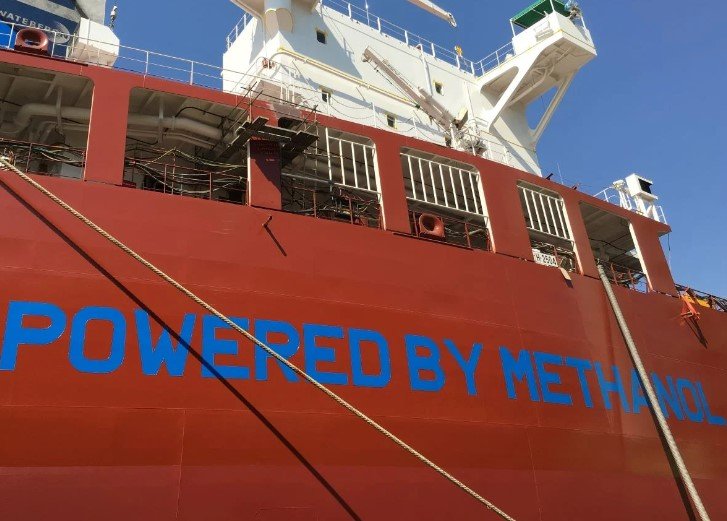
This transition will not be without its challenges. Widespread methanol adoption carries serious implications for the entire maritime ecosystem.
Although methanol is less volatile than traditional fuels, but it dissipates quickly in water, thereby reducing explosion and spill risks. However, it is toxic and flammable, and this would confront the industry with new safety hazards.
Comprehensive new training programs for crew are essential. Seafarers must be proficient in handling methanol’s toxicity, managing dual-fuel systems, and responding to methanol-specific fire scenarios (which require alcohol-resistant foam, not water).
The entire vessel design and operation would require new safety protocols, including gas detection systems, ventilation requirements, and double-walled fuel piping to prevent leaks. The successful classification approval from the China Classification Society for the COSCO project indicates that these rigorous standards are being successfully developed and implemented.
As the adoption continue to grow, the global bunkering network will have to evolve. Nations and companies that control the production and distribution of green methanol will gain significant geopolitical and economic influence, potentially reshaping global energy security dynamics.
Ayoola Ponle, FICS
2 responses to “Adoption of Methanol as Alternative Fuel in Powering Vessels: Where is the Industry Now?”
-
Nice one
-
This is a good development especially with its approval by the China Classification Society

Leave a Reply